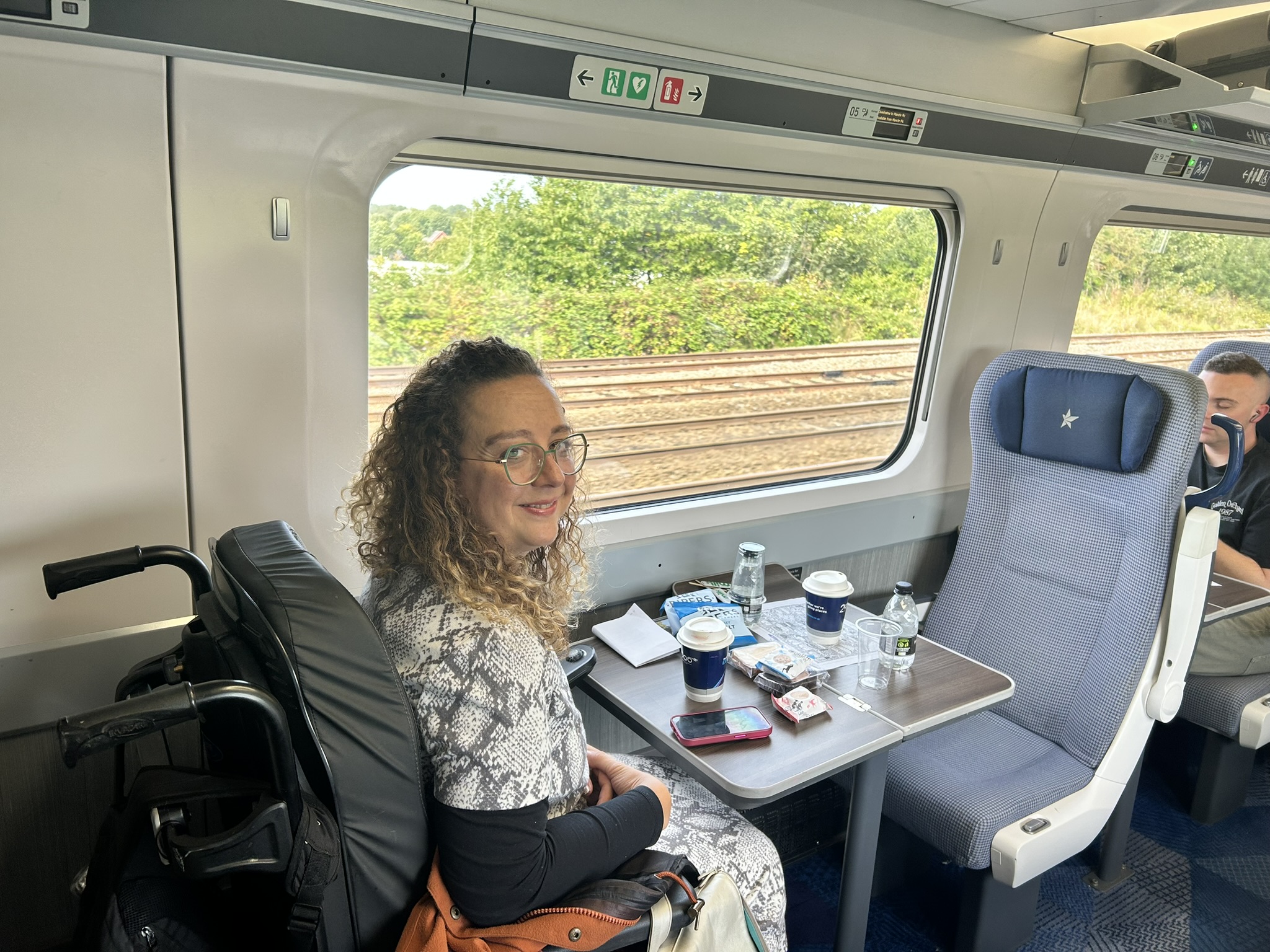
For Carrie Ann Lightley, travel is part of everyday life.
As an accessible travel writer, speaker, creator and consultant, she regularly travels around the UK for work. But trains also take her to new places, days out and experiences she wants to enjoy.
For Carrie Ann, being able to make those journeys independently matters.
“What I love about being able to travel by train is that it enables me to travel independently and solo.”
Over the years, train travel has taken her to different cities and towns across the country, often to places she has never visited before.
There is still a sense of achievement that comes with it.
“I always got a little buzz out of, ‘I’ve made it. I’ve been in a new city, I’ve been in a new town, I’ve smashed my meetings, I’ve got back on the train, I’m on my way home.’”
Passenger Assistance is one of the tools that helps make those journeys easier.
Taking some of the admin out of accessible train travel
Before using the Passenger Assistance app, Carrie Ann would usually request assistance by phone or through individual train operator websites.
It worked, but it added another process to an already busy journey.
“That would be quite time consuming and draining. Ultimately, I don’t want to have to make extra phone calls or spend extra time on the internet if I don’t have to.”
Carrie Ann describes those extra steps as a “time and energy drain”.
As a wheelchair user, she recognises there will can be additional considerations when she travels. But her aim is simple: for her travel experience to be as close as possible to that of a non-Disabled passenger.
Discovering the Passenger Assistance app gave her a quicker way to request the support she needs.
“As soon as I saw the opportunity to do this in a potentially more efficient way, I wanted to do it.”
Today, she uses Passenger Assistance for around 80% of her train journeys, while still using Turn Up and Go when her plans are more spontaneous.
“I’m able to just open the app up and in a few taps I know it’s requested.”
Keeping access needs in one place
One of the biggest differences for Carrie Ann is being able to save her profile and access needs rather than starting again every time she travels.
Even small details can make a journey more comfortable.
When travelling with a specific train for example, Carrie Ann knows the carriage that is best placed for her to board and disembark. Having that preference saved means she does not need to explain it again each time.
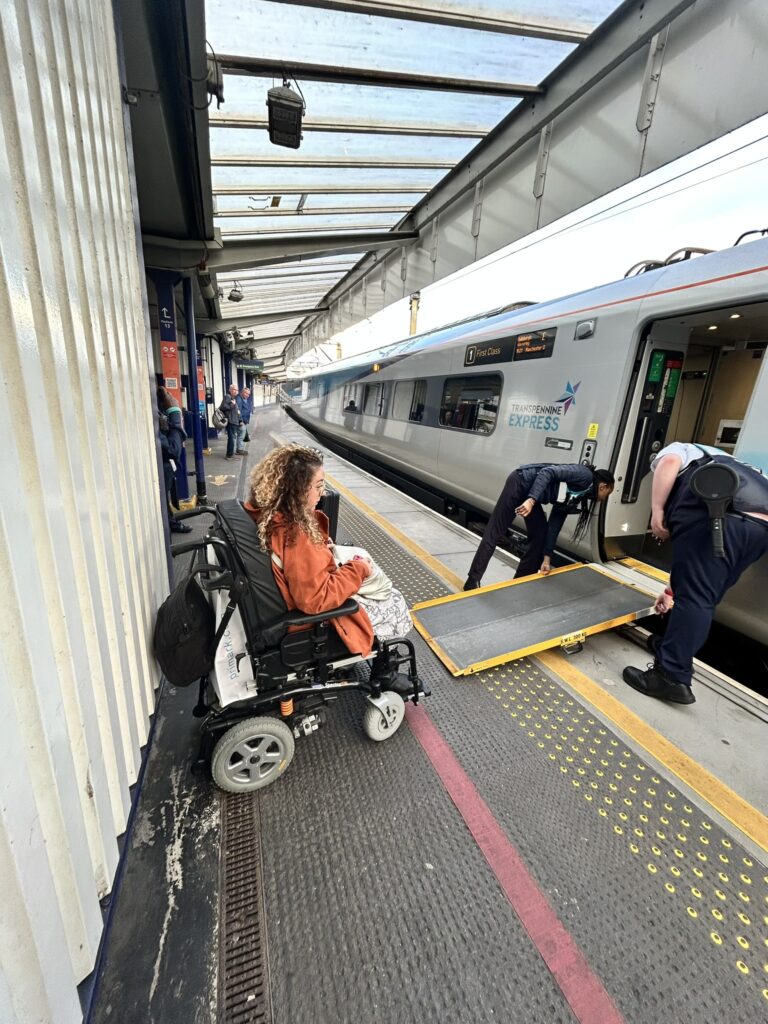
“Just the small thing of not having to retype that or re request it on the phone every time I travel, it just allows it to be easier.”
Her needs can also change from one journey to another. Sometimes she is travelling alone. Sometimes someone is coming with her. She might have luggage or need something different from a previous journey.
Having the options clearly available in the app reduces the mental energy involved in remembering what she requested last time.
It also gives Carrie Ann one place to return to when she wants to check the journey she has planned.
“I know ultimately that the page on the Passenger Assistance app that shows me when my next booking is, is the source of truth. This is the train that you’re definitely getting on because this is where your assistance is.”
Supporting passengers and local station staff
Carrie Ann usually requests assistance when travelling from her local station.
It is a small station and she has built relationships with many of the people who work there.
“They know me, they remember me. I arrive in the morning and they say, ‘Hey Carrie Ann, how are you? How’s the family? We’ve got the ramp ready and waiting for you. Go and get yourself a coffee.’”
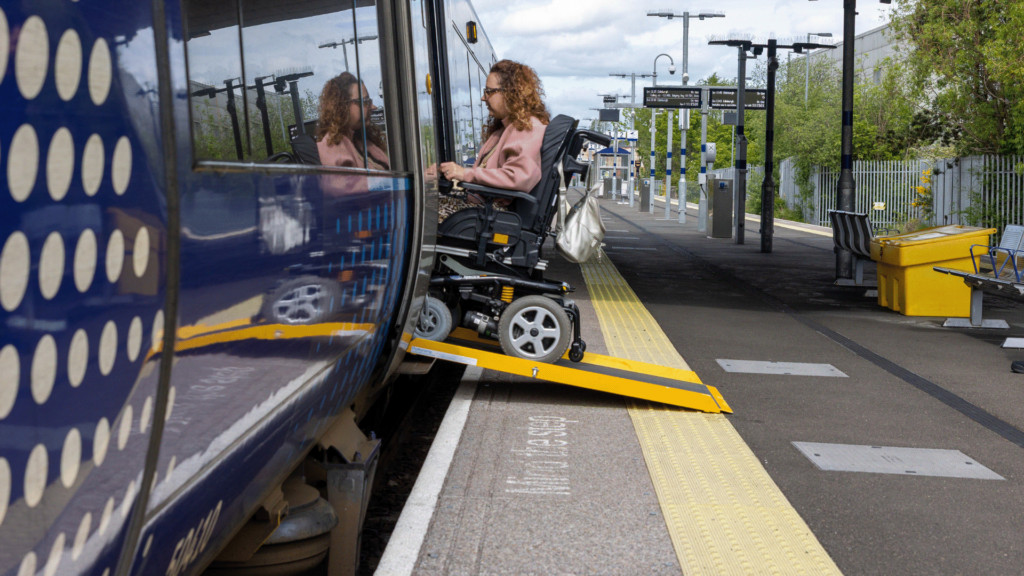
Carrie Ann using a ramp to board the train.
For Carrie Ann, requesting assistance is not only about knowing what support she will receive.
Because she understands how her local station operates, sharing her plans ahead of travelling can also help staff know she is coming and prepare the assistance she has requested.
“I want to do what I can to make the day go as smoothly as possible, not only for me, but for the staff that are providing that assistance as well.”
That does not mean every journey needs to be planned in advance.
Carrie Ann also uses Turn Up and Go. If a meeting finishes early, she might choose an earlier train home. On other days, particularly when she is exploring a bigger city, she may not know exactly which service she wants to take.
Having both options gives her flexibility to travel in the way that works for her.
One less thing to worry about
For work, Carrie Ann travelled from home to Dundee to speak at a conference.
Public speaking is work she loves, but this journey felt different.
It was the first time in more than a year that she had travelled that distance alone. The trip involved changing trains, navigating an unfamiliar part of the route, getting to her hotel and preparing to speak in front of hundreds of people the following morning.
There was already plenty on her mind.
“I remember the morning of the trip really having to dig deep mentally to be like, ‘Okay, we can do this. We can do hard things. We’ve done this many times before.’”
Passenger Assistance could not remove every uncertainty around the trip. But having her assistance requested meant the train journey was one less thing competing for her attention.
“I was overwhelmed with worry and concerns as it was. So just having that bit taken away was really helpful.”
And somewhere along the way, the journey changed.
On the train towards Dundee, Carrie Ann looked up from her phone as the train crossed the Forth Bridge. It was a bright early spring day and the view immediately shifted her mood.
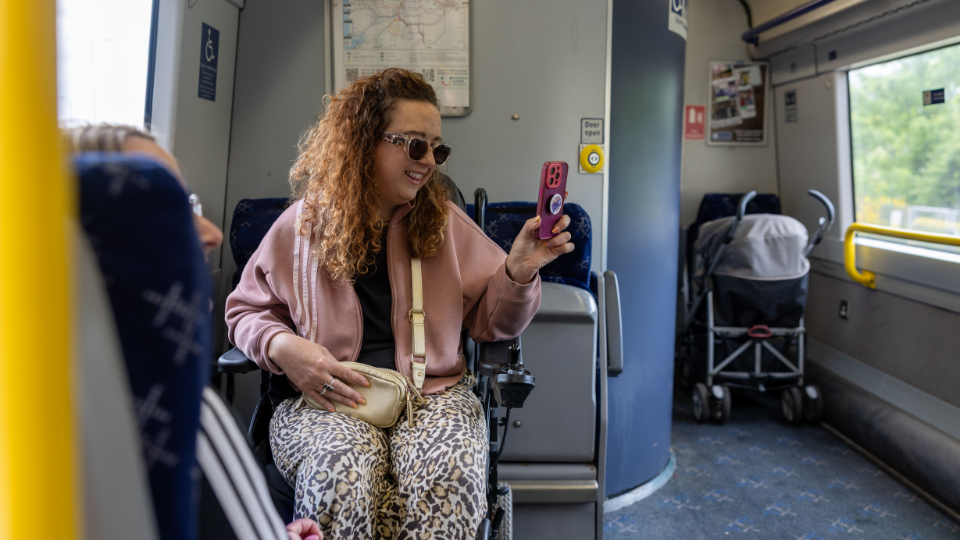
Carrie Ann smiling at her phone while chatting with fellow passengers
“It just changed my mood instantly. It was a feeling of connection with the place and what a privilege it was to be there and experience that view, which I wouldn’t have had without going on the train.”
It is a reminder of why accessible travel matters.
The journey is not only about getting from one station to another. It is about the work opportunities, friendships, experiences and adventures at the other end.
When a good train journey feels ordinary
For Carrie Ann, the best accessible train journey is not necessarily remarkable.
In fact, she would rather it was not.
“A good rail journey for me feels mundane. It should feel a little bit boring, actually. I want my transport to be as boring and ordinary as it is for everybody else that’s on the train.”
Her ideal journey is simple: her wheelchair space, a cup of tea, some snacks and a good book.
Passenger Assistance does not mean that every rail journey will be perfect, and it does not remove every accessibility barrier Disabled passengers can encounter.
But for Carrie Ann, having a simple way to request assistance helps remove one piece of the mental load. It gives her more space to concentrate on the reason she is travelling in the first place.
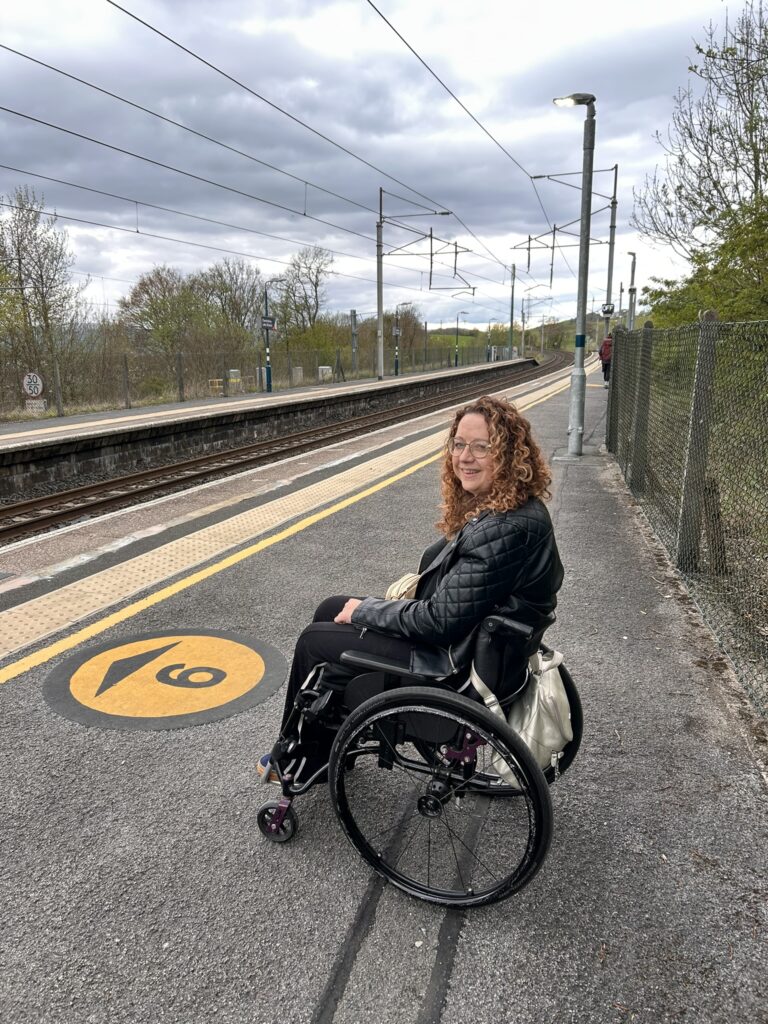
Carrie Ann smiling while waiting for her train on the platform.
And while difficult experiences can understandably affect confidence, Carrie Ann does not want the possibility of something going wrong to stop her experiencing what travel can offer.
“The potential for challenges will always be there. That is the nature of travel for everybody, but it’s amplified more when you are living with disability and you need accessible travel.”
Her message to other Disabled travellers is one that has come to define her approach to travel:
“Accessible travel isn’t always easy, but in my experience, it is always worth it. Your comfort zone is nice, but nothing can grow there.”
Passenger Assistance is one way to help make it easier.
Passengers can request assistance through the Passenger Assistance app or website. If you prefer to travel without requesting in advance, Turn Up and Go is also available.
Find out more about how Carrie Ann uses Passenger Assistance on her:
Instagram: @carrieannlightley